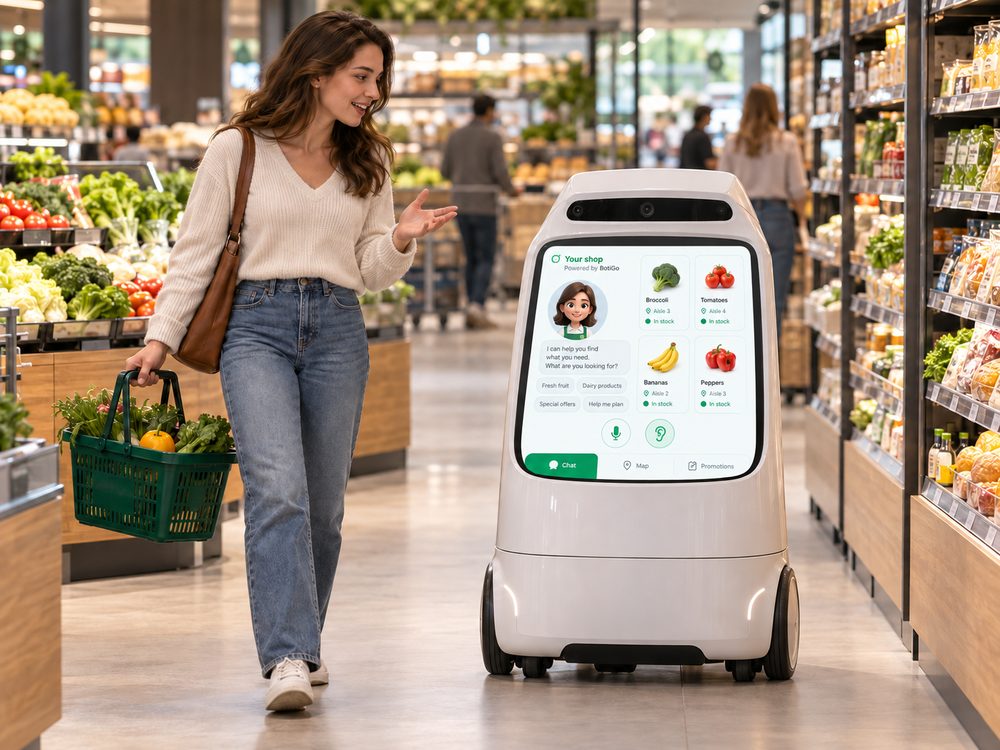
BotiGo helps shoppers find products through natural conversation, mainly by voice, in their own language — answering questions about location, price, alternatives, and availability with store-specific knowledge. Built for any store, from large supermarkets to neighbourhood shops.
Figures from the current software prototype, which uses a simulated store with made-up stock, categories and prices.
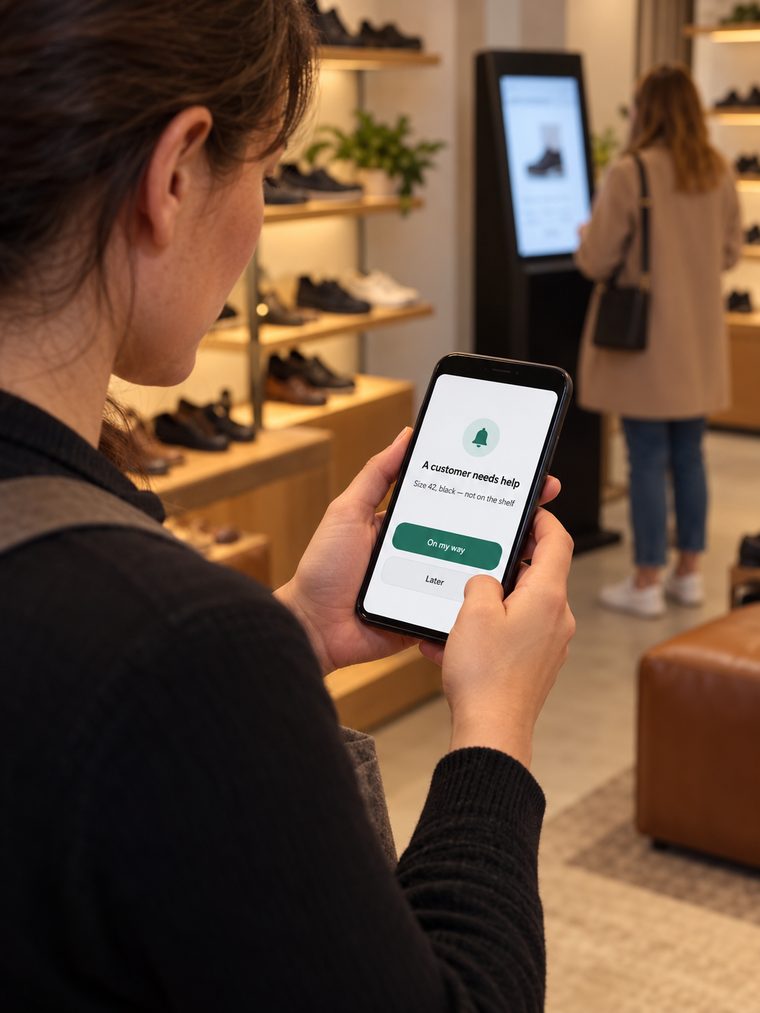
Customers waste time. Staff answer the same questions all day. Store data exists — but it's locked in back-office systems.
BotiGo connects natural language interaction with a store's own product catalogue, prices, and layout — in the customer's own language. Each feature below is labelled as live in the prototype, planned for the pilot, or later.
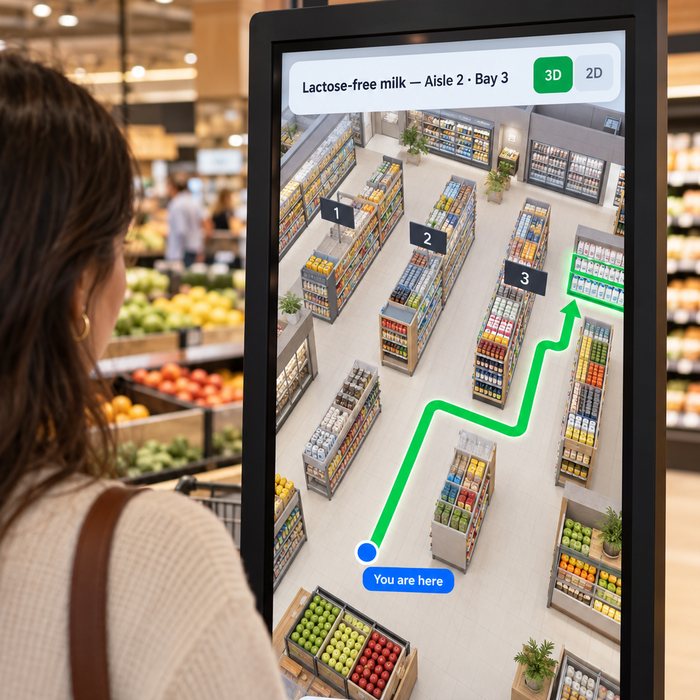
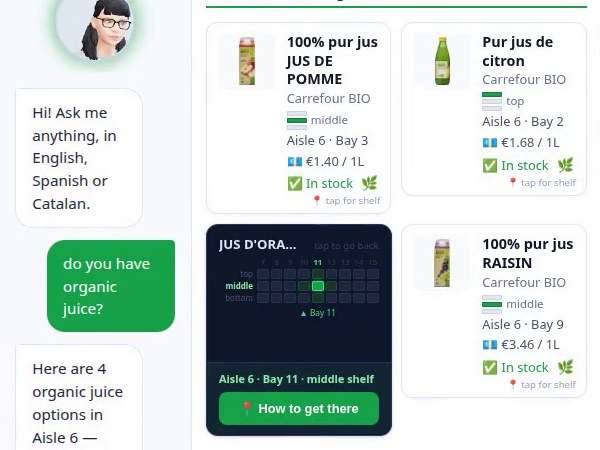
The core idea: ask out loud, get the exact shelf, and be guided there.


The same assistant adapts to very different stores. Here is how it applies to a large retailer and to a local shop.

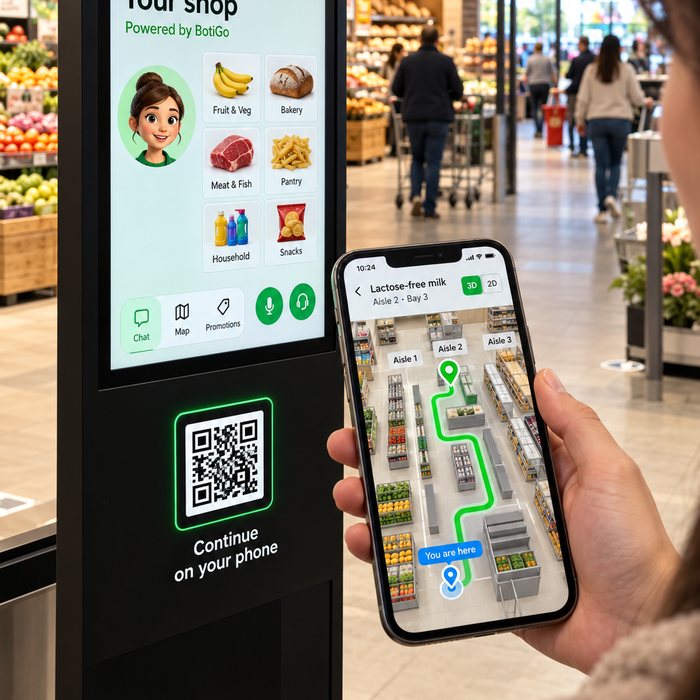
Thousands of products across many aisles: customers lose time finding things and staff are pulled away to answer location questions.


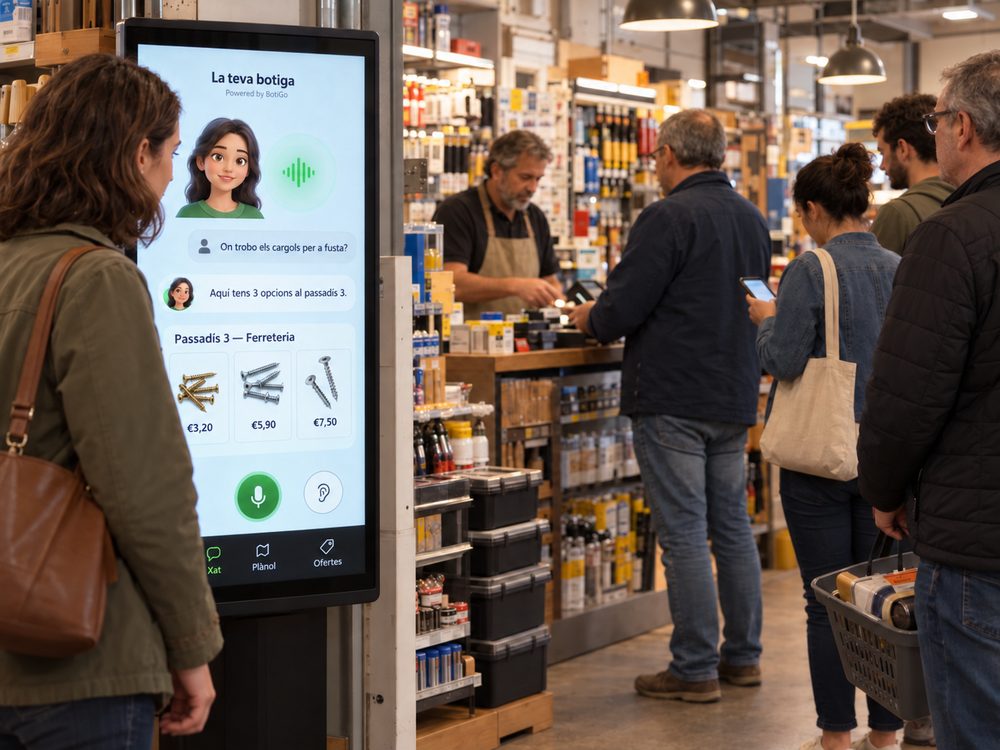
Small teams where the owner answers the same questions all day, and many customers do not share the shop's language.


The demo below is a simulated grocery store. BotiGo is designed for any retailer.
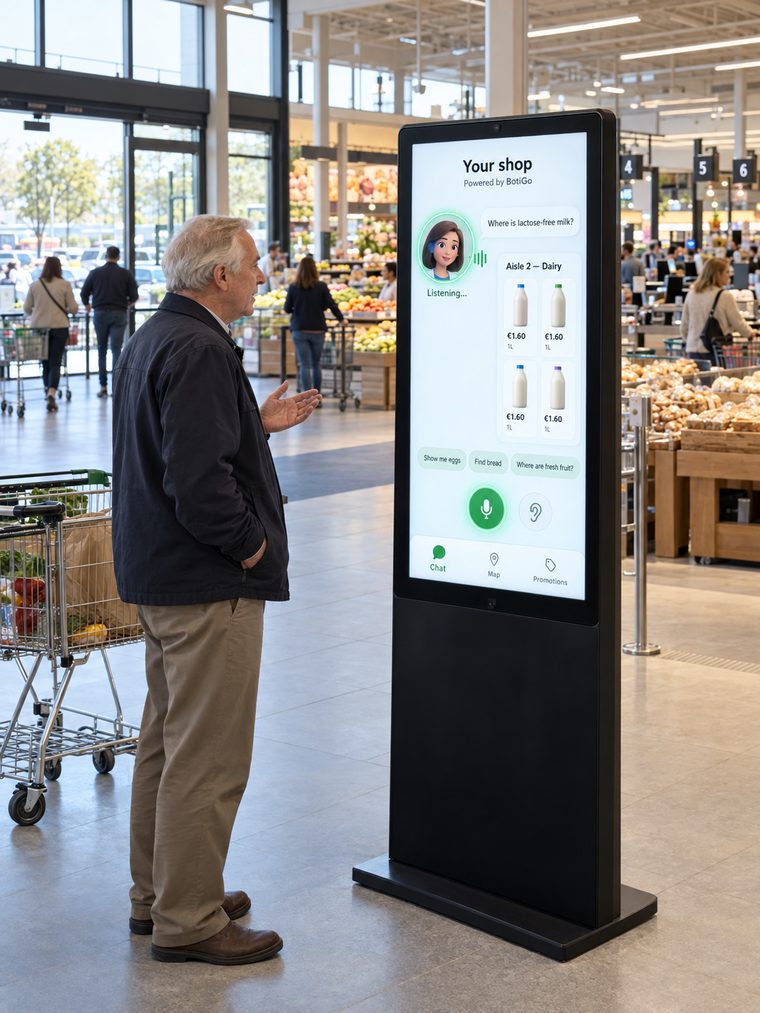
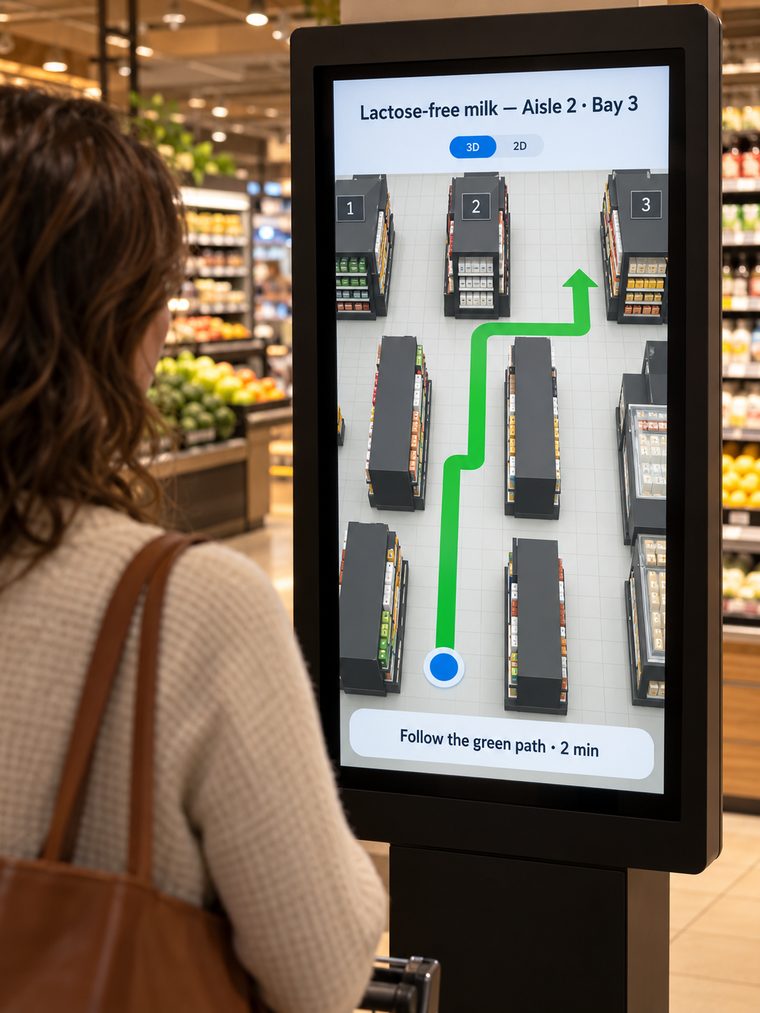
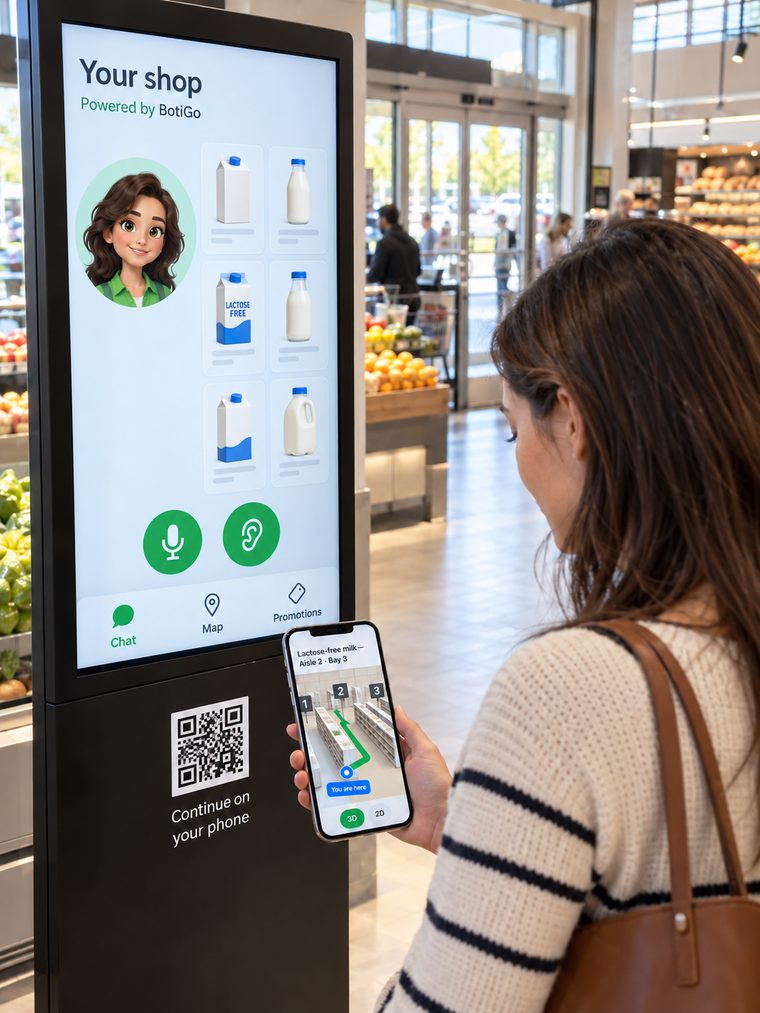
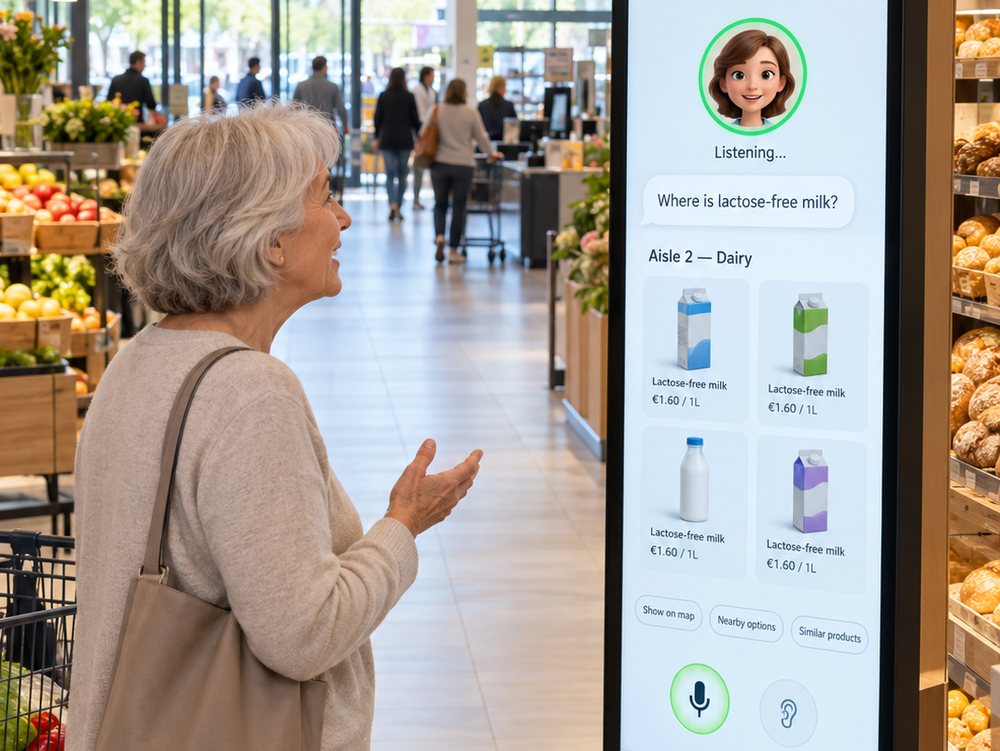
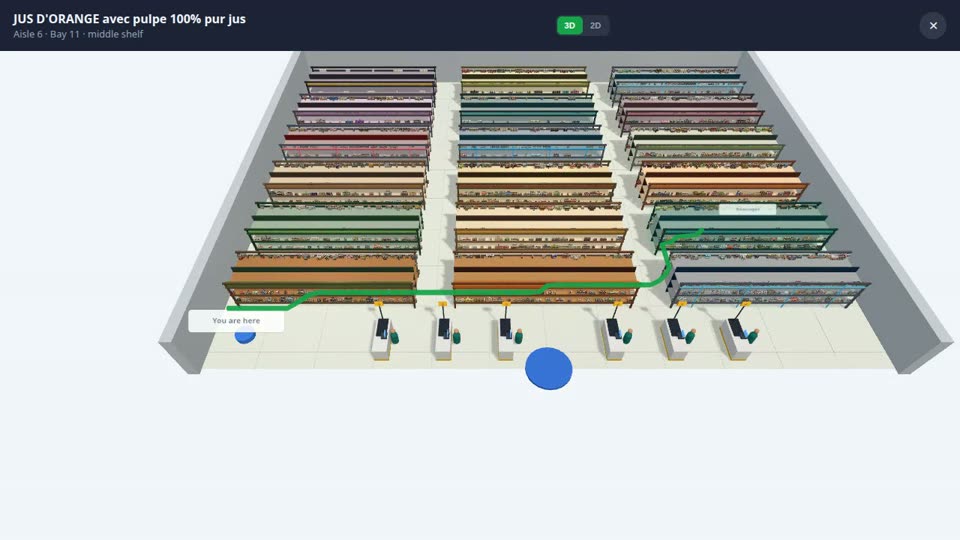
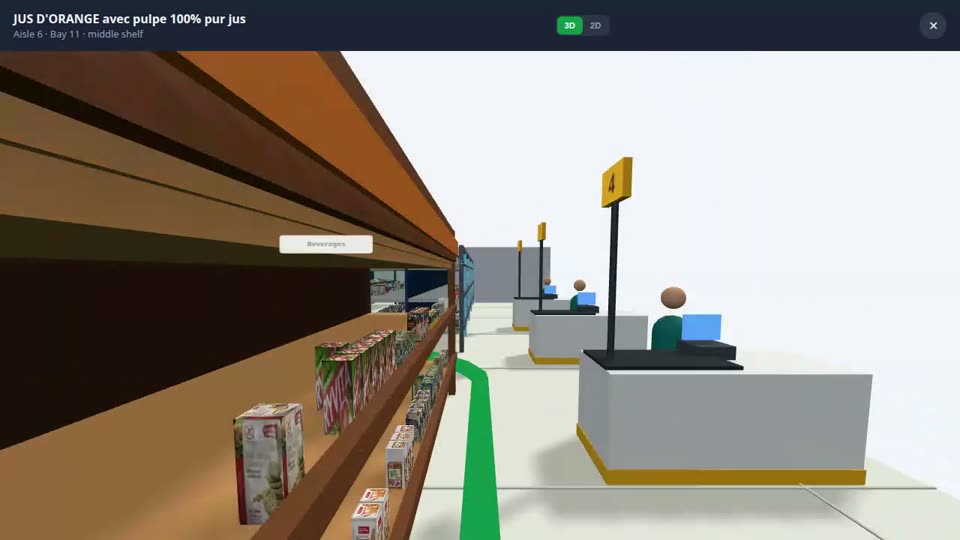
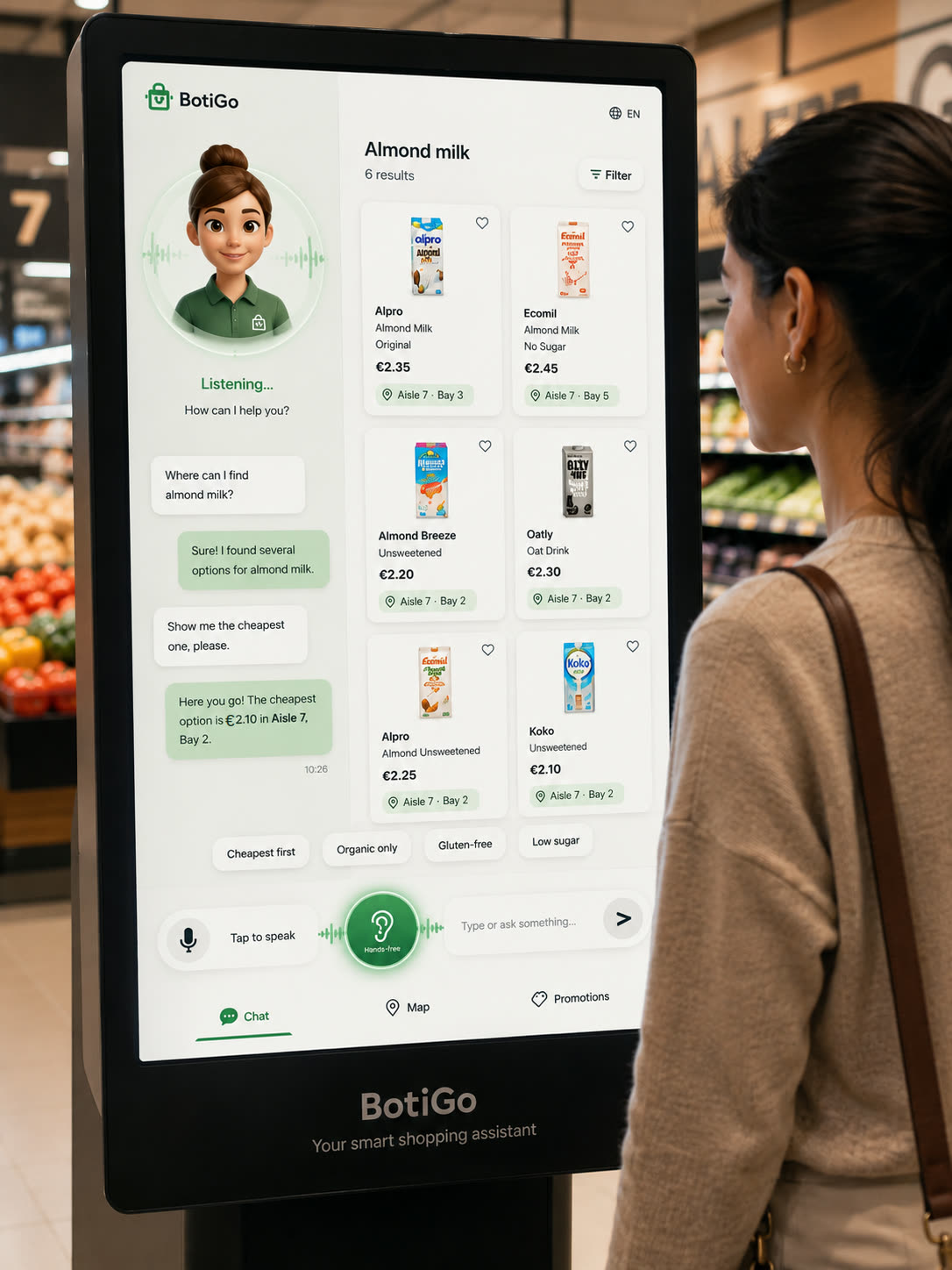
BotiGo already has an early interactive prototype that demonstrates the core concept of the in-store assistant. Ask questions, get product locations, see the store map, and hear the responses spoken aloud.


Customers mainly speak to BotiGo and get specific, actionable guidance — spoken and shown. Touch complements voice: check product cards, ask for a location, or tap a suggested question. Examples use the simulated demo store.
BotiGo combines large language models, retrieval-based product search, structured store databases, and store-layout mapping. The assistant is grounded in store-specific data, so answers come from the store's own catalogue rather than generic knowledge.
The voice-first interface uses speech recognition and neural text-to-speech for multilingual conversation; the demo supports Catalan, Spanish and English. The platform is designed to run on-premises or at the edge, keeping store data local.
A working prototype today, a pilot in a real shop next, and a path toward shelf vision and robotics later.

Kiosk-style software prototype with voice, search, map, and product guidance.

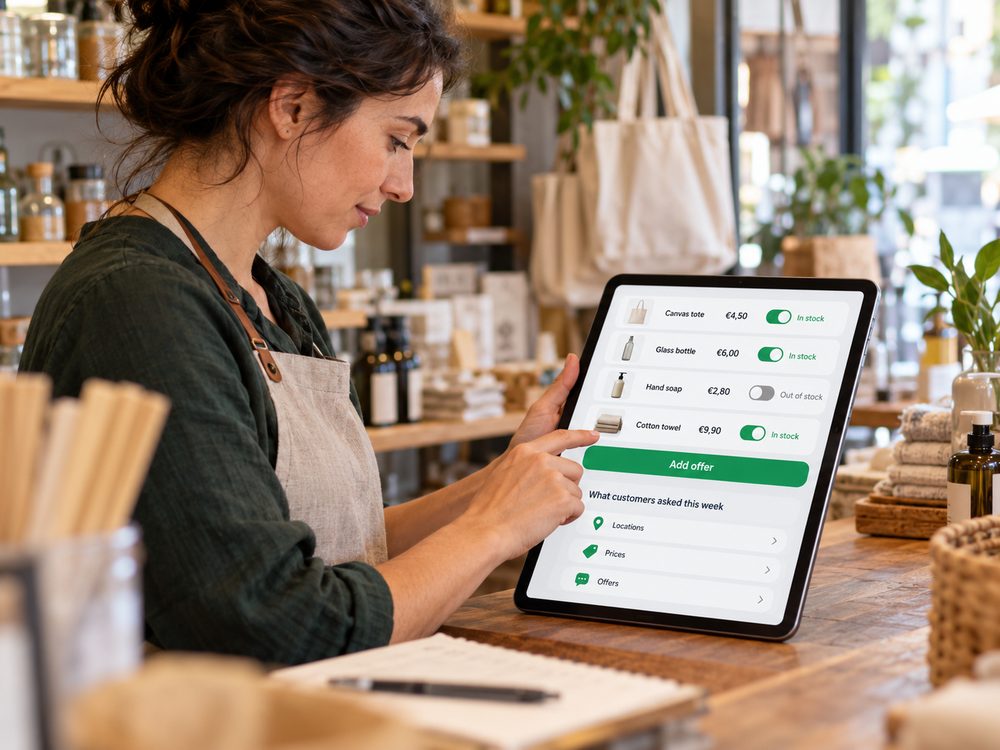
Validate the assistant with real customers in a real store — starting with a local shop — and give the shopkeeper simple tools.

Computer vision and mobile robots provide shelf awareness.
BotiGo is led by a technical founder with more than 15 years of experience in AI, computer vision, robotics, deep learning, large-scale data processing, and industrial R&D. The project combines practical retail needs with deep technical expertise in AI, computer vision, and autonomous systems — building something that works in the real world, not just in research labs.
We are looking for local shops, larger retailers, and innovation partners to validate the MVP, test real customer interactions, and explore in-store product guidance, shelf awareness, and future robotics integration.
or email directly: wail.mubarak@gmail.com